Species & Systems
Freshwater Species
Freshwater species form the core of inland aquaculture in Andhra Pradesh and are the most relevant starting point for Rajam. These profiles describe environmental needs, suitable systems and management considerations for the species most often farmed or discussed.
Rohu
Labeo rohita
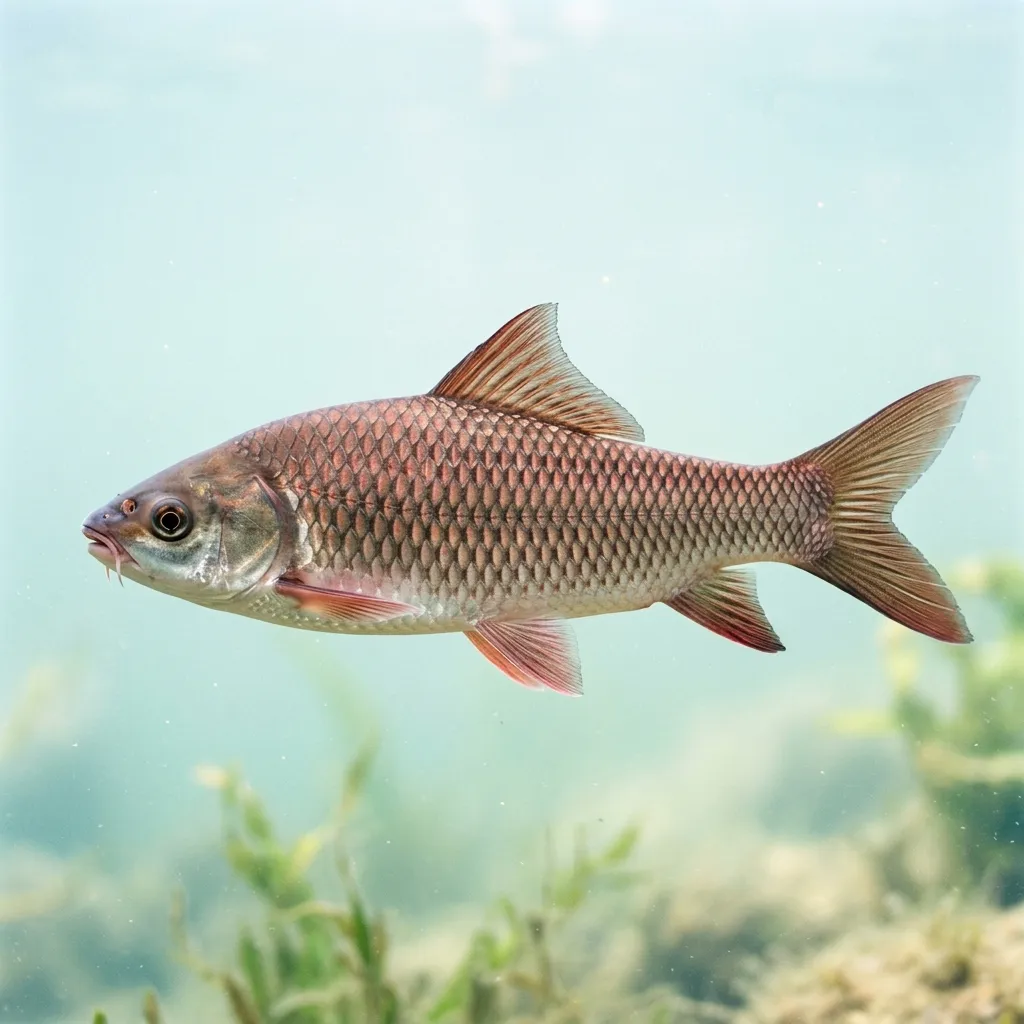
Illustrative image.
- The most widely farmed Indian major carp, prized in regional markets.
- Feeds in the water column on plant material and detritus; accepts supplementary feed.
- Traditionally grown in polyculture with catla and mrigal to use all pond layers.
- Thrives in warm water; tolerates moderate turbidity; needs adequate dissolved oxygen.
- Hatchery seed widely available through induced breeding.
Catla
Labeo catla (also cited as Catla catla)
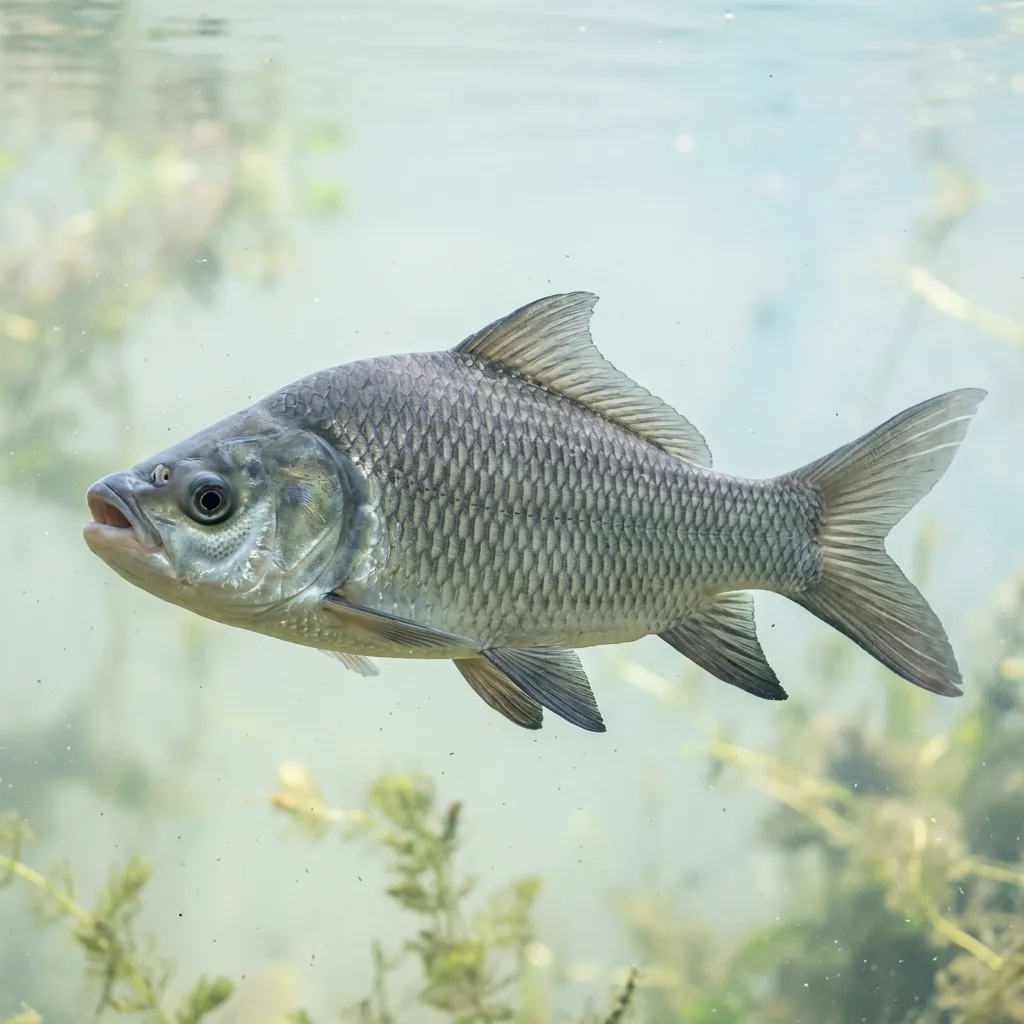
Illustrative image.
- Fast-growing surface feeder that consumes zooplankton.
- Occupies the upper pond layer in traditional carp polyculture.
- Sensitive to low oxygen; benefits from aeration at higher densities.
- Large head and deep body; reaches market size quickly under good management.
Mrigal
Cirrhinus mrigala
Photograph: Priyankar Chakraborty · CC BY-SA 4.0. Depicted: Cirrhinus mrigala. Wikimedia-provided thumbnail downloaded without further image edits; source page records any earlier changes.
.JPG)
- Bottom-feeding Indian major carp that completes the three-species polyculture.
- Consumes detritus and benthic organisms, helping keep the pond bottom clean.
- Hardy, with established hatchery production.
Nile tilapia
Oreochromis niloticus
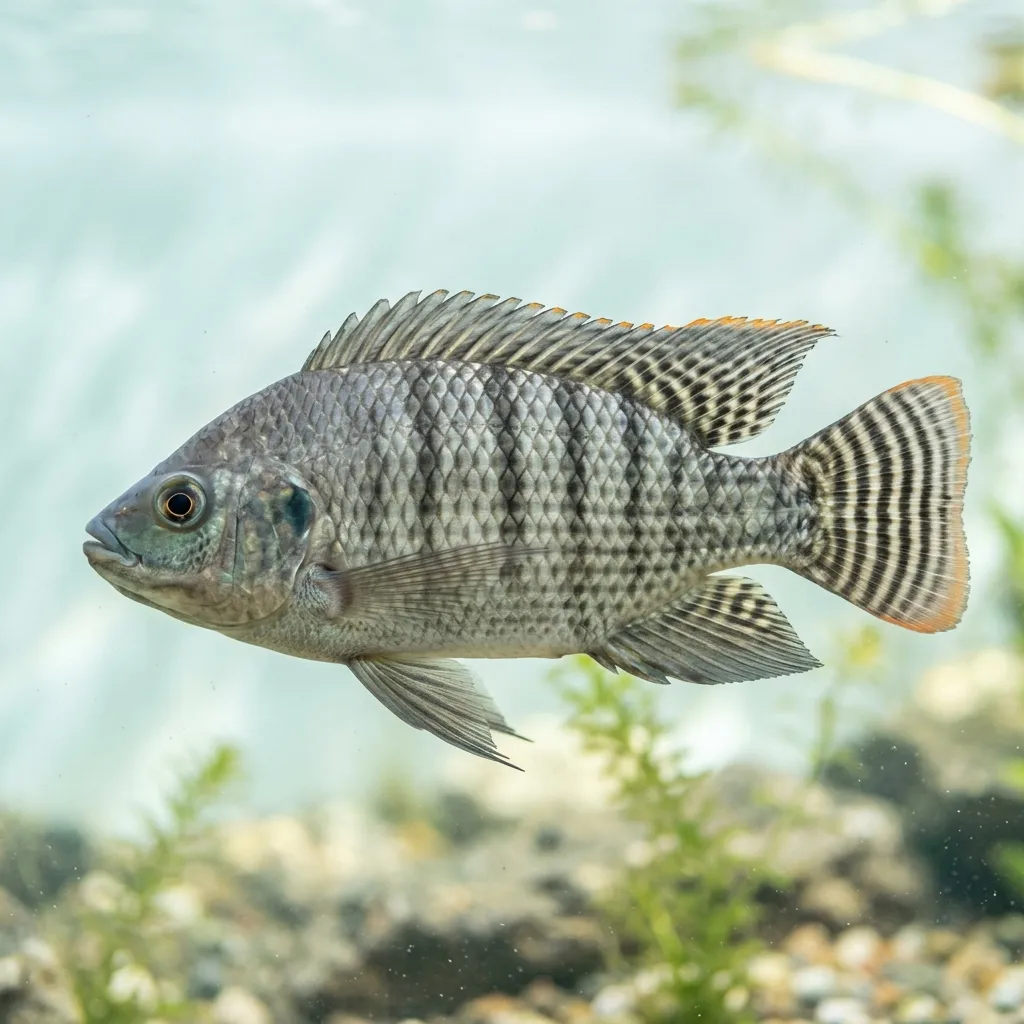
Illustrative image.
- Hardy, fast-growing omnivore tolerant of a wide range of conditions; widely raised in ponds, biofloc and RAS internationally.
- In India, tilapia culture is regulated; farmers should confirm current permissions and approved strains before stocking.
- Breeds prolifically; all-male populations are used to prevent overcrowding.
- Tolerates turbid water and accepts floc, making it a common biofloc species.
Pangasius
Pangasianodon hypophthalmus
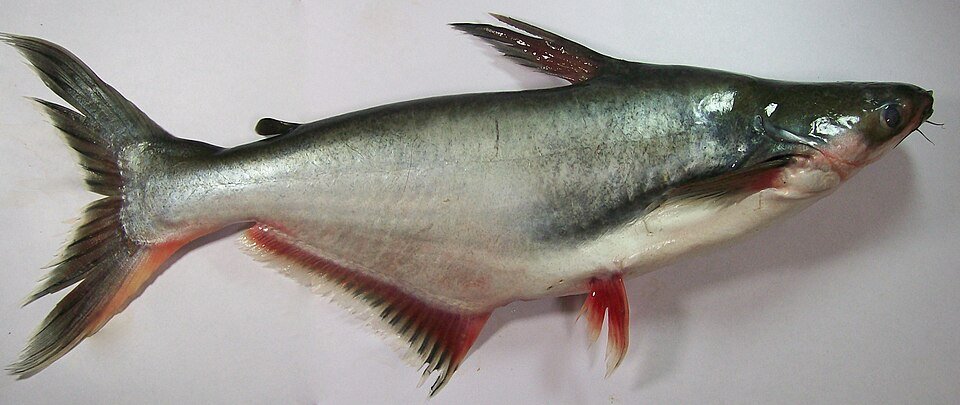
Photograph: Staticd · CC BY-SA 3.0. Depicted: Pangasianodon hypophthalmus. Wikimedia-provided thumbnail downloaded without further image edits; source page records any earlier changes.

- Air-breathing catfish that tolerates low oxygen and very high densities.
- Widely farmed in Andhra Pradesh ponds; fast growth on formulated feed.
- Market price is often lower than for carps; volume and feed efficiency drive economics.
- Suited to intensive ponds and considered for RAS where market demand exists.
Magur and other catfish
Clarias magur
Verified species photograph pending.
- Native Asian catfish valued in regional markets.
- Air-breathing and tolerant of crowding, suited to tanks and small ponds.
- Confirm species identity carefully; non-native Clarias species are restricted in India.
Giant freshwater prawn
Macrobrachium rosenbergii
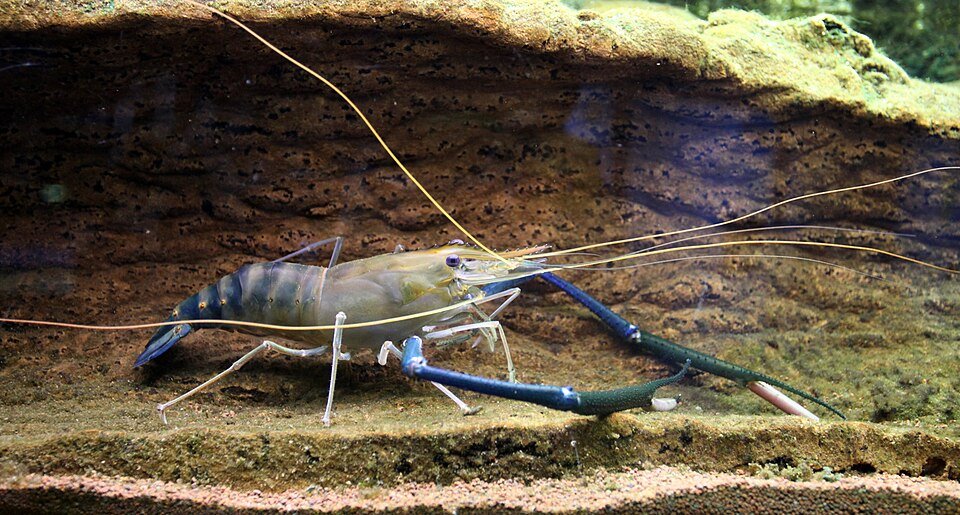
Photograph: Citron · CC BY-SA 3.0. Depicted: Macrobrachium rosenbergii. Wikimedia-provided thumbnail downloaded without further image edits; source page records any earlier changes.

- Grows in freshwater ponds but larvae require brackish water in the hatchery.
- Territorial and cannibalistic; lower densities and shelters improve survival.
- Often polycultured with carps; valued in domestic and export markets.
Polyculture and layered feeding
Traditional Indian carp polyculture stocks catla (surface), rohu (column) and mrigal (bottom) together so that natural food at every depth is used. This approach remains relevant to improved ponds and illustrates a principle that applies to all systems: match species to the food and space actually available.
Considerations, not prescriptions
These profiles do not set stocking densities, feed rates or expected yields. Those depend on site, water, seed quality, feed and management, and should be worked out with local technical guidance and tested over complete cycles.